
Dom Robert / Kate MccGwire
The exhibition is accompanied by a soundscape created especially by Laurent Paulré.
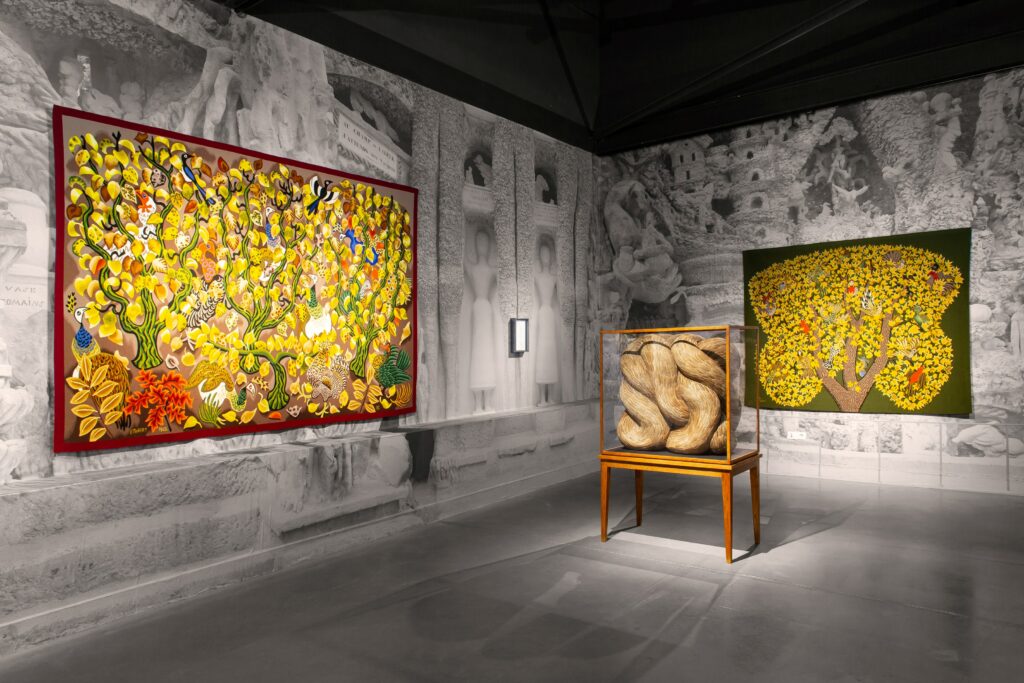
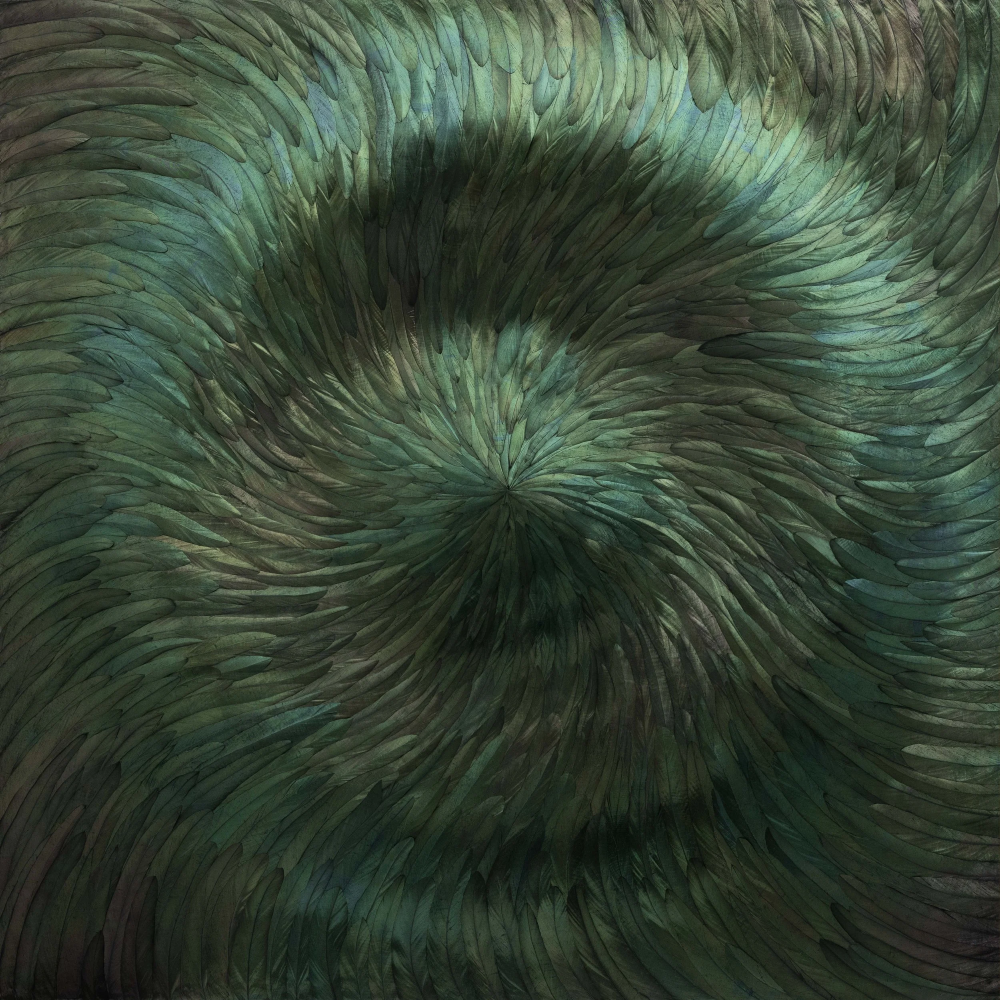
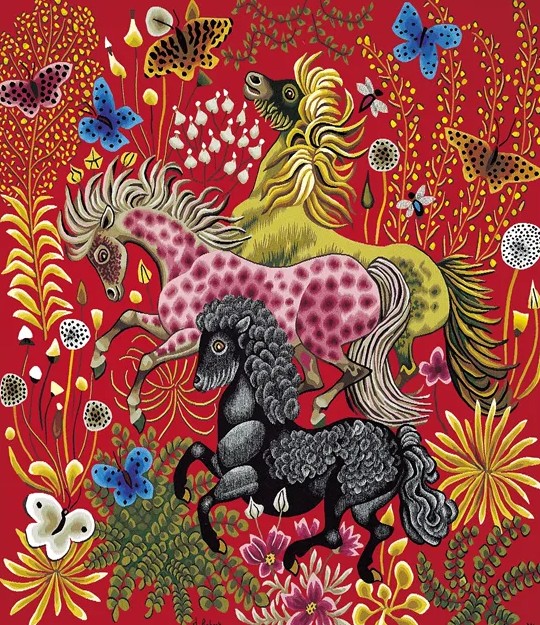
A messenger between sky and earth, the figure of the bird appears throughout the works on display, sometimes adorned with the flamboyant colours of tapestry, sometimes reduced to the fragile and mysterious essence of its feathers. Parade is an invitation to follow this flight, to let yourself be carried away between luxuriance and strangeness, between jubilation and silence.
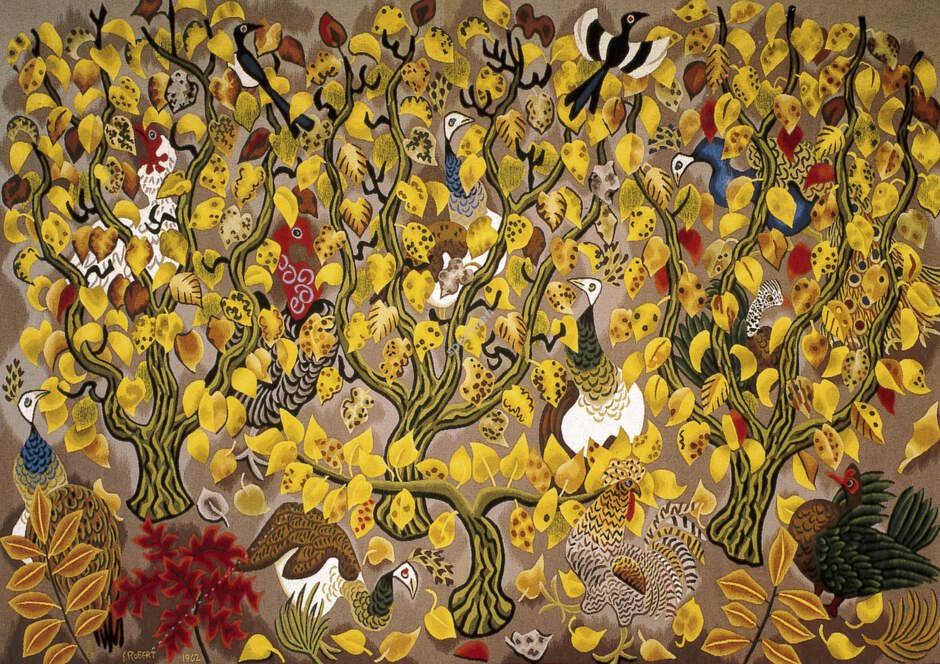
The large, luminous tapestries of Dom Robert (1907–1997), a major figure in Aubusson tapestry, depict a bountiful natural world where birds, flowers and foliage compose vibrant, almost musical scenes. In his works, the profusion of colours and the rigour of the design convey a pantheistic joy and a celebration of life.
Like Facteur Cheval, Dom Robert did not seem destined for artistic recognition: a Benedictine monk, he found in tapestry a language to exalt nature and the spirit. Facteur Cheval, meanwhile, a simple postman, built stone by stone a dream palace that defies time. Both men created unexpected works of art, born of their loyalty to an inner world stronger than convention.
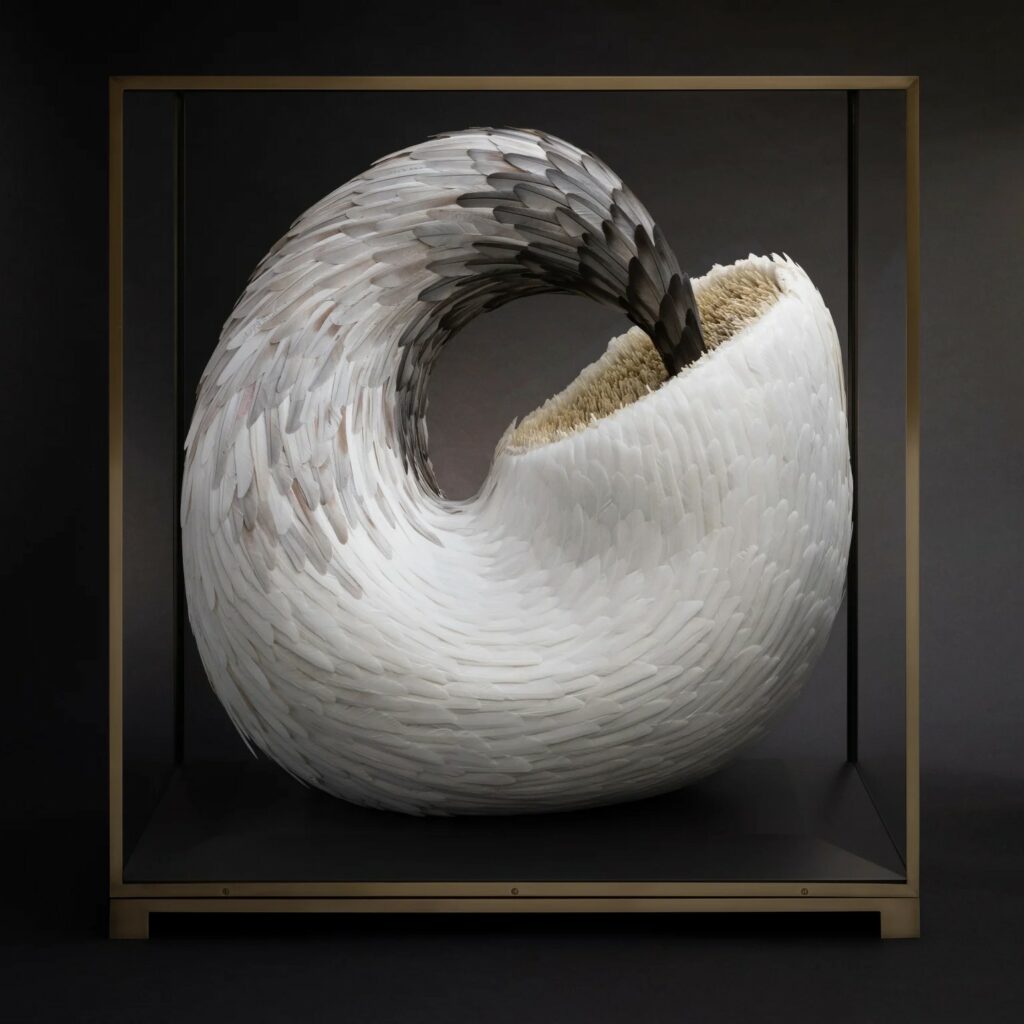
Opposite them, the feather sculptures and bas-reliefs by Kate MccGwire (born in 1964 in Norfolk) evoke animals in a completely different way. Her tangles of feathers, with their silky, shimmering textures, give shape to enigmatic creatures that are both seductive and disturbing. The feathers, detached from the bird, become organic matter, flows, spirals or knots, evoking the body, instinct and mystery.
Kate MccGwire’s work, through the patient collection of feathers, their sorting and meticulous assembly, shares with tapestry this dimension of endurance and perseverance. Each work is the result of an infinite repetition of gestures, a long period of time that sculpts the material and transforms it into a vision. This relationship with time, with almost obstinate patience, echoes the work of Facteur Cheval: the tireless repetition of gestures becomes creative power, a way of defying the ephemeral to inscribe dreams in matter.
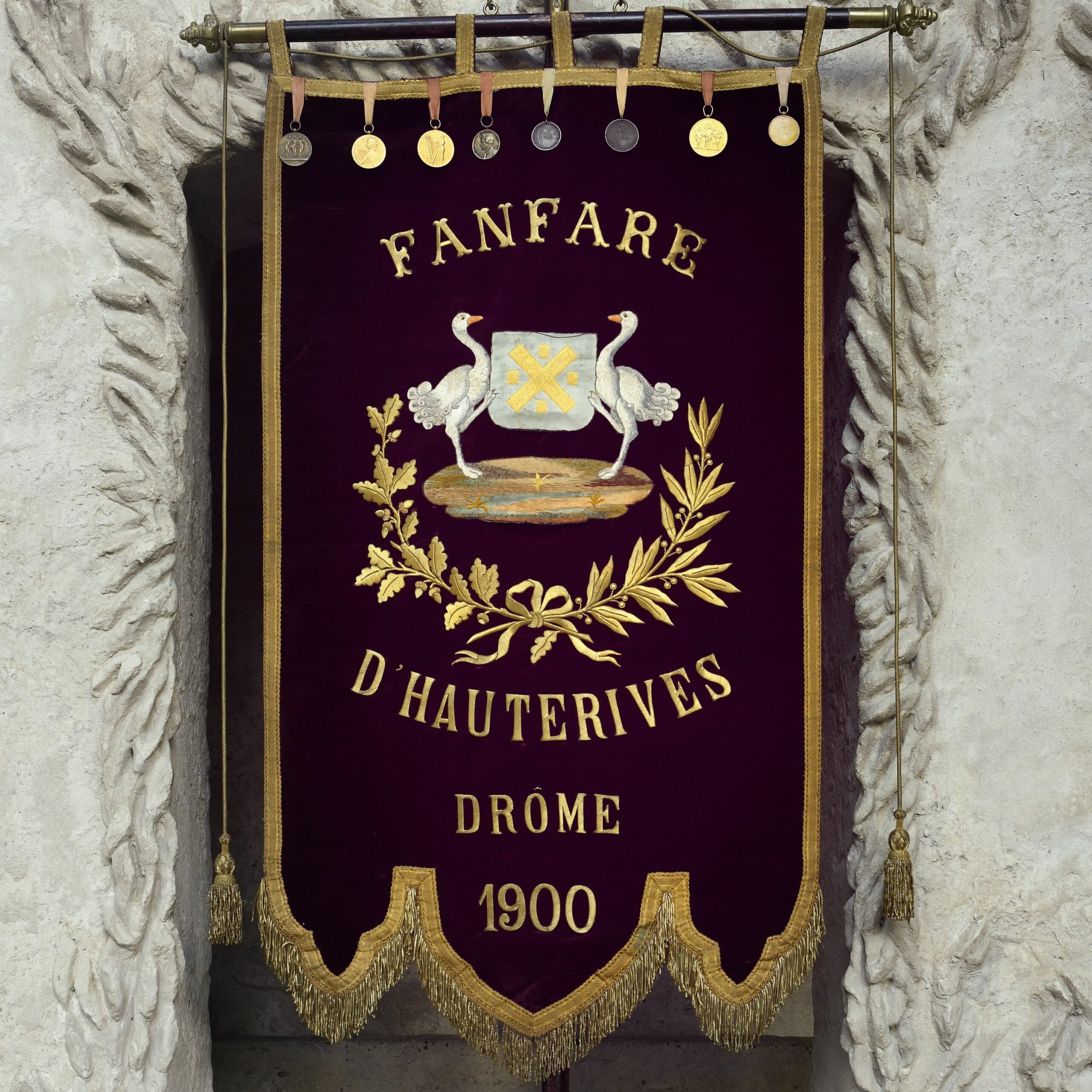
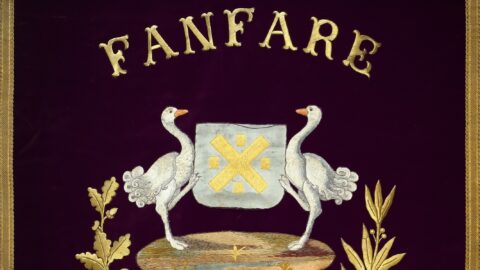
The Parade exhibition unfolds a rich universe where unusual objects and local curiosities intermingle. Among them, one detail surprises and intrigues: why, in 1900, did the emblem of the Hauterives brass band feature two large birds, ostriches? Every summer during Facteur Cheval’s lifetime, this brass band came to play at the Ideal Palace, and several clues today testify to the close relationship between its musicians and the builder. Without knowing precisely the nature of the ties that bound them, it is fun to imagine the brass instruments resounding in front of the baroque facades of the Ideal Palace at the very beginning of the 20th century, providing the building in progress with a unique soundscape.
It is in this spirit that visitors are invited to enter Parade and immerse themselves in a soundscape specially designed by Laurent Paulré (Radio France). This creation brings to life both the birdsong so dear to Cheval and the festive energy of a village parade, like a dreamlike echo of the brass band concerts of yesteryear. Played on an authentic gramophone from 1900, this composition opens the exhibition by blending memory and imagination, bringing a bygone atmosphere back to life and inviting everyone to experience it anew.